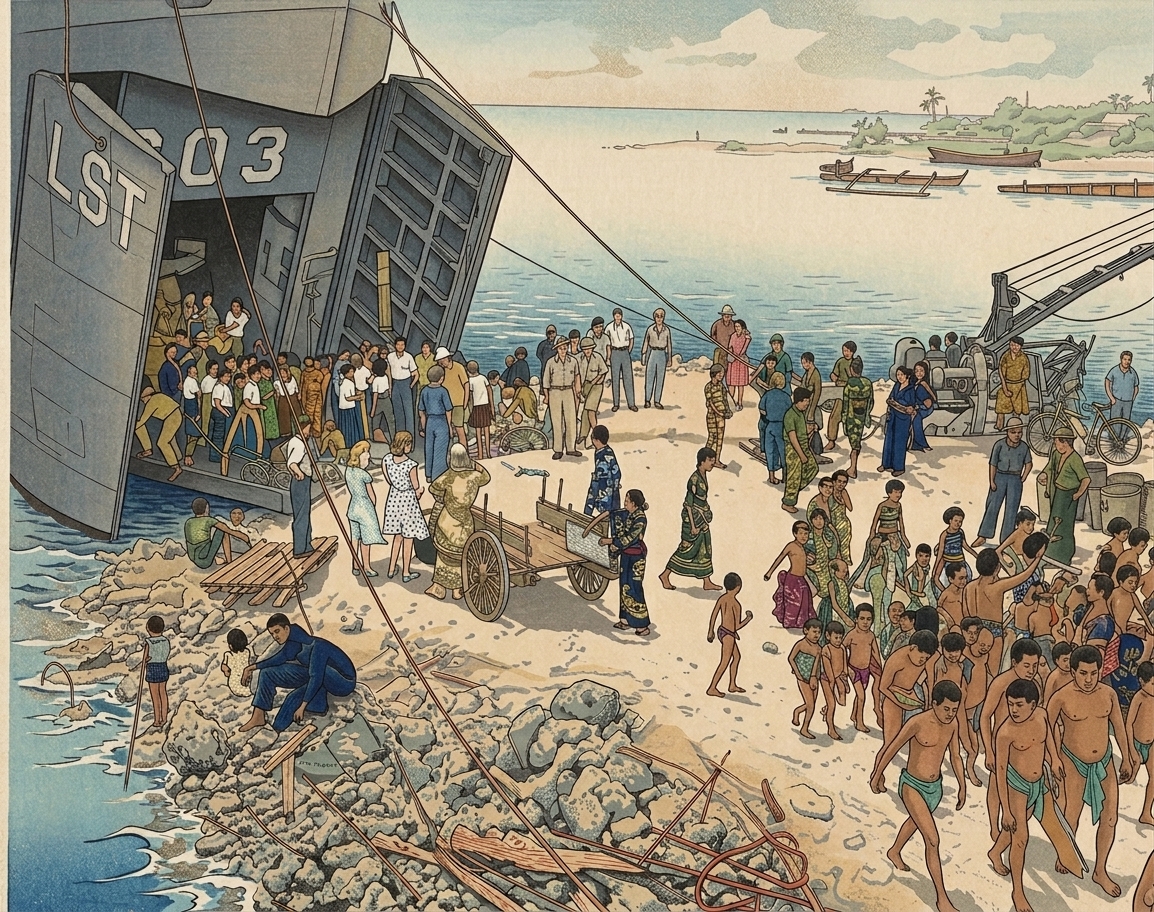

By the middle of April 1948, the packing was finished. On the beach at Yap, two groups of people stood in the equatorial sun, preparing to say goodbye: on the sand, the Yapese; on the deck of the grey Navy landing ship, the last of the Chamorros.
They had lived together for more than half a century. They had traded copra, shared fish, learned one another’s dialects, and survived a war that nearly starved them all; now, they were separating. There was no hatred in the parting—only the quiet, awkward resolve of two distinct peoples trying to figure out how to go home.
The Chamorro presence on Yap was an accident of colonial geography. It began in 1886, when Spain set up a modest administrative post on the island and brought along clerks, teachers, and craftsmen from Guam. Among them was a schoolteacher named Asuncion Martinez Cruz. She met a Spanish soldier, married him, and eventually returned to Guam; others stayed. They built houses, planted crops, and took root.
When the island changed hands—first to the Germans in 1899, then to the Japanese in 1914—more Chamorros arrived, this time from Saipan. They were hardworking people. They ran the radio stations, repaired the boats, cut hair, built furniture, and kept the small machinery of island commerce turning. At home, they spoke Chamorro; in the shops, they spoke Yapese and Japanese. They were adaptable, industrious, and comfortable.
Then the war came, and the comfort vanished.
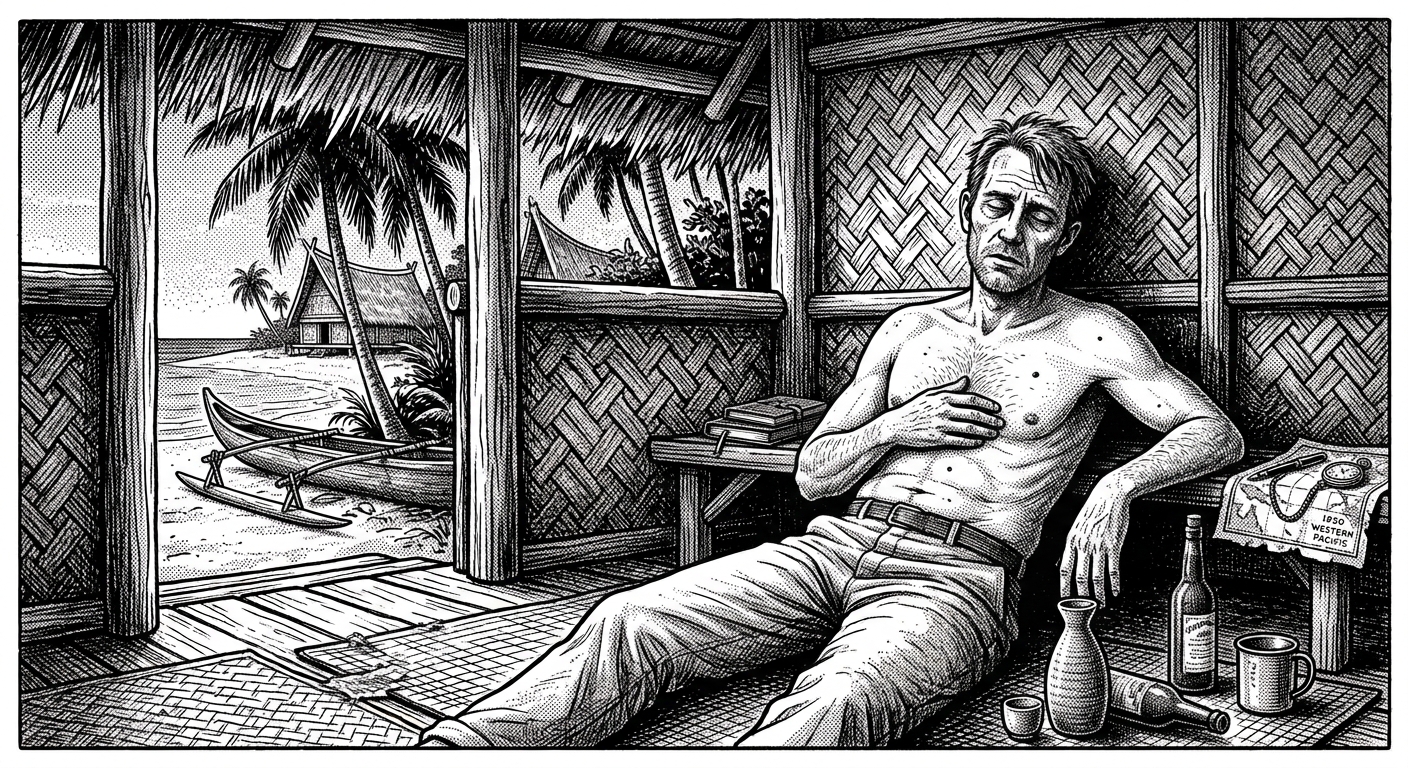
Military rule flattened the island’s trade; basic survival became a daily, hand-to-mouth struggle. The worst of it was not the hunger, but the cruelty that swept through in the final months. In the autumn of 1944, Japanese forces seized the local Spanish priest, a lay brother, and a Filipino weather observer named Hondonero, along with his Chamorro wife and their children. They were taken to Palau and executed.
When the fighting ended, the island was left in silence. The Yapese wished to govern themselves, and they asked the American Military Government, politely, if the Chamorros might be repatriated. It was not an expulsion born of malice—the Yapese simply wanted their small island free of a large, persistent minority.
The U.S. Navy agreed to help. They offered the Chamorros land in the Marianas equal to whatever they left behind on Yap.
The families descended from Saipan went first, leaving in 1946. Those whose origins lay in Guam faced a harder choice—land on Guam was tied up in military claims—so they chose Tinian, an island few of them had ever set foot on. In February of 1948, eighteen men sailed ahead to look the place over; they found the soil good and the prospects bright.
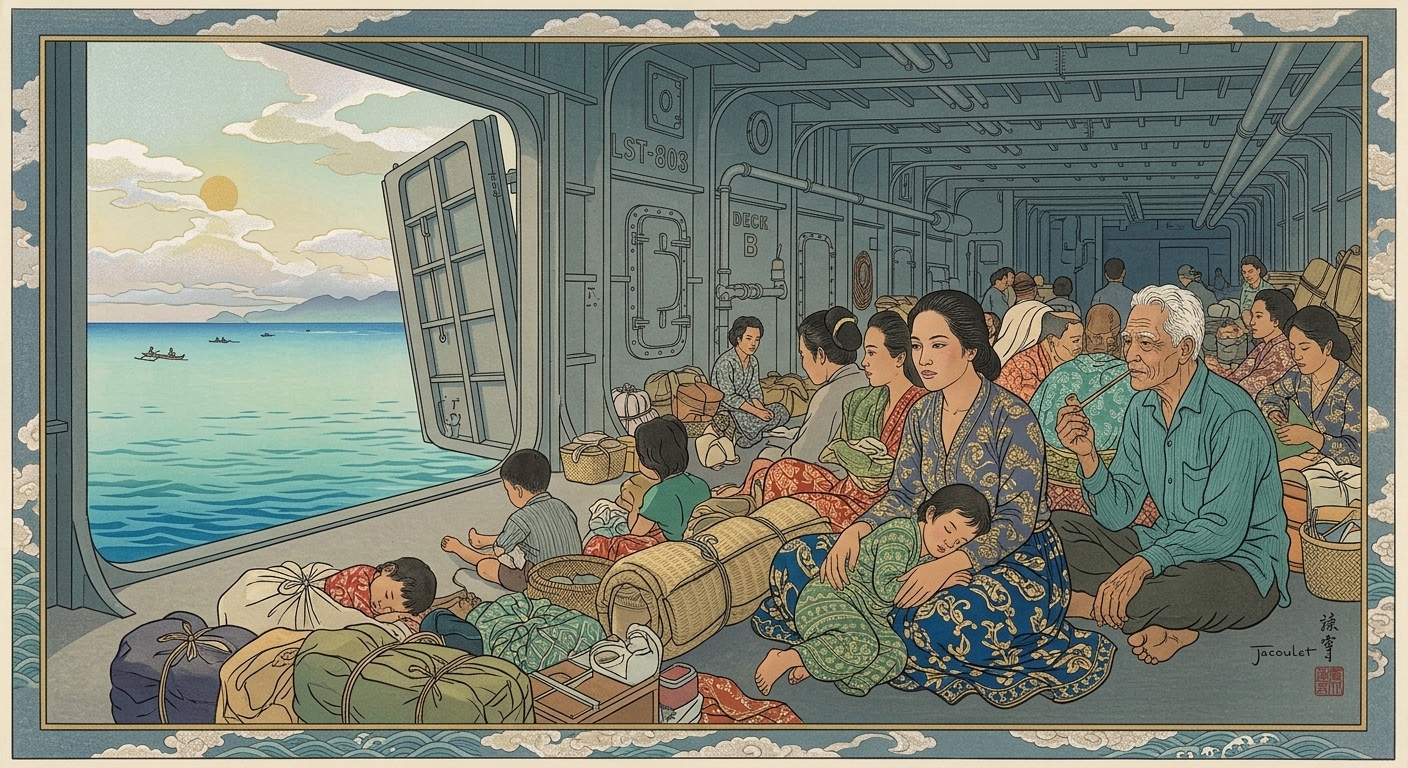
Two months later, LST 803 lifted its anchor and turned north. The people on the deck watched the island shrink to a thin green line, then disappear into the water. They were going to a new island to start over—which is, after all, what their grandfathers had done sixty years before.