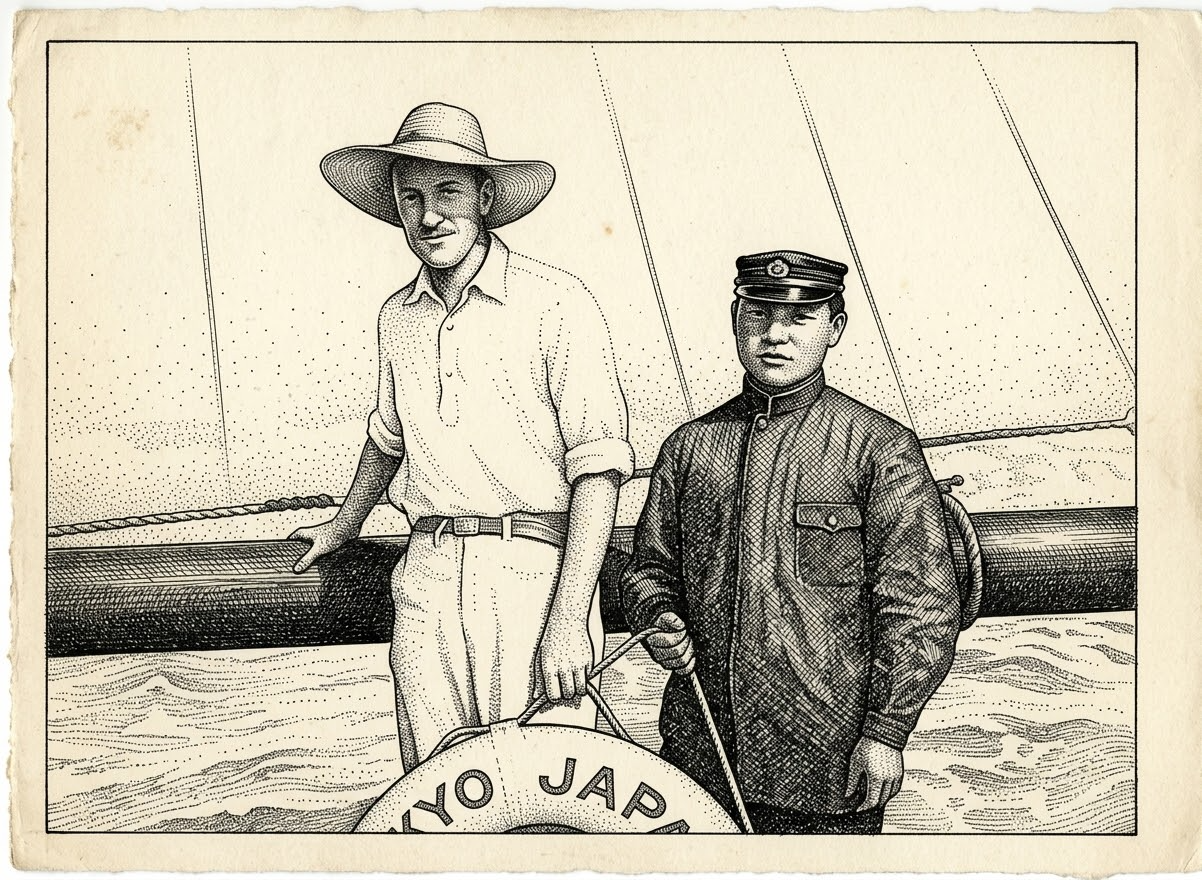

Japan ruled the islands under a League of Nations mandate. Foreigners were watched. In Hornbostel's case, the suspicion was fair: he was spying for the U.S. Navy. When he finished on Rota in 1926, the deputy governor demanded his trunks three days early. Inspectors planned to seize every map, film strip, and notebook.
His key map listed native CHamoru place names. To scholars, it was priceless. To a guard, it looked like a bombing grid. Found, it would burn.
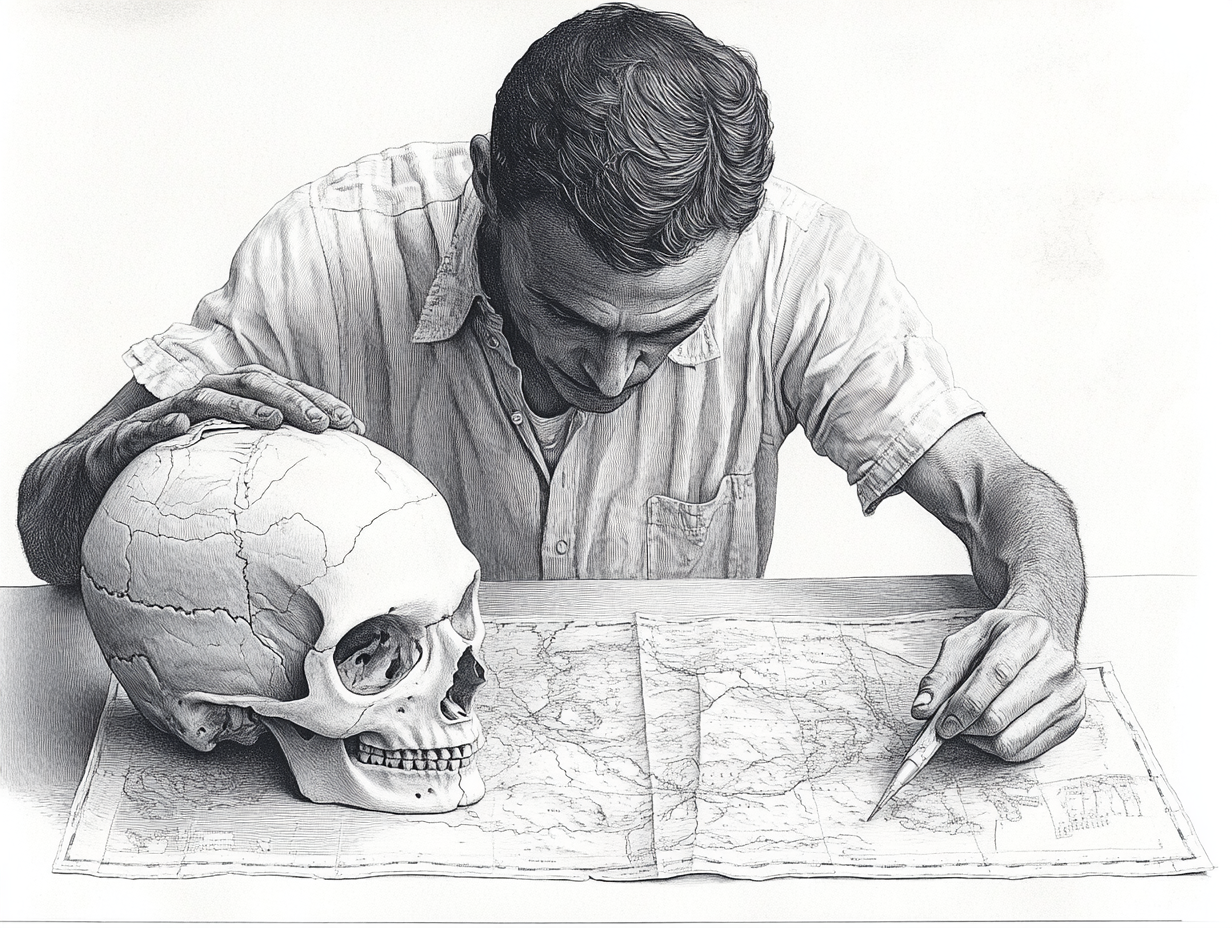
Hornbostel used a cultural barrier. Shinto custom shunned human remains, so he knew the guards would avoid them. He cut his maps, photos, and notes into small squares. He pushed the slips through the foramen magnum at the base of his excavated CHamoru skulls. He packed the rest with newsprint to stop any rattle.
It worked. Guards gutted his trunks but shrank from the crates of crania. Hornbostel walked onto his schooner with an island's past tucked inside skulls.
Modern readers often judge 1920s field collecting by today's standards, where islanders rightly demand their heritage back. Yet without Hornbostel's scheme, those records would have vanished when World War II carpet-bombing flattened Saipan and Tinian. He saved what was left to reclaim.