
On the cover of Philippine Magazine for February 1934, there sat a wooden spoon. It was not the flat, silvered cutlery of an American dining room. Carved into its handle was a human figure, small and quiet, shaped by hand.
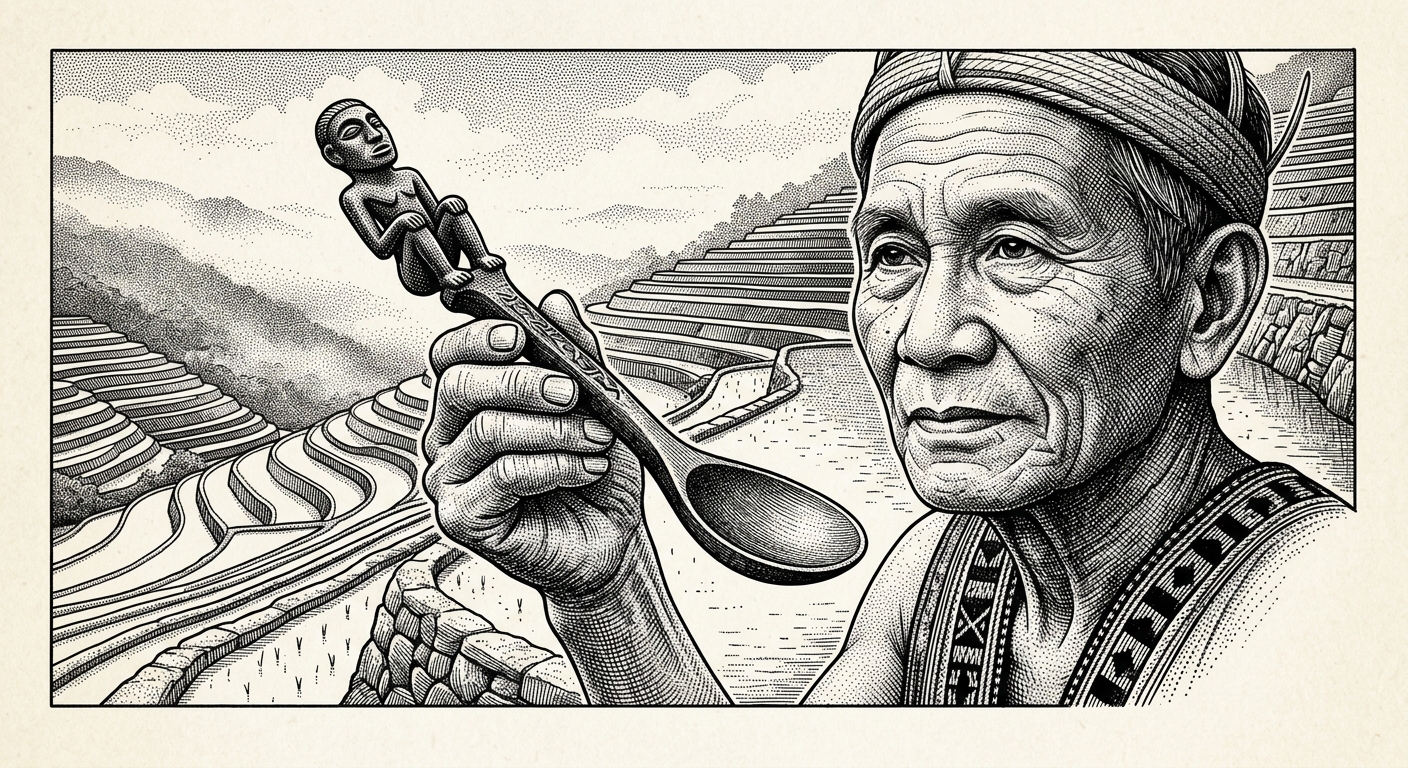
In the mountains of northern Luzon, the Ifugao have farmed the steep slopes for thousands of years. Their stone rice terraces at Banaue step straight up into the clouds—monuments to long patience and steady work. Just as old, perhaps, is the pakko, the spoon used to eat the grain grown on those high ledges.
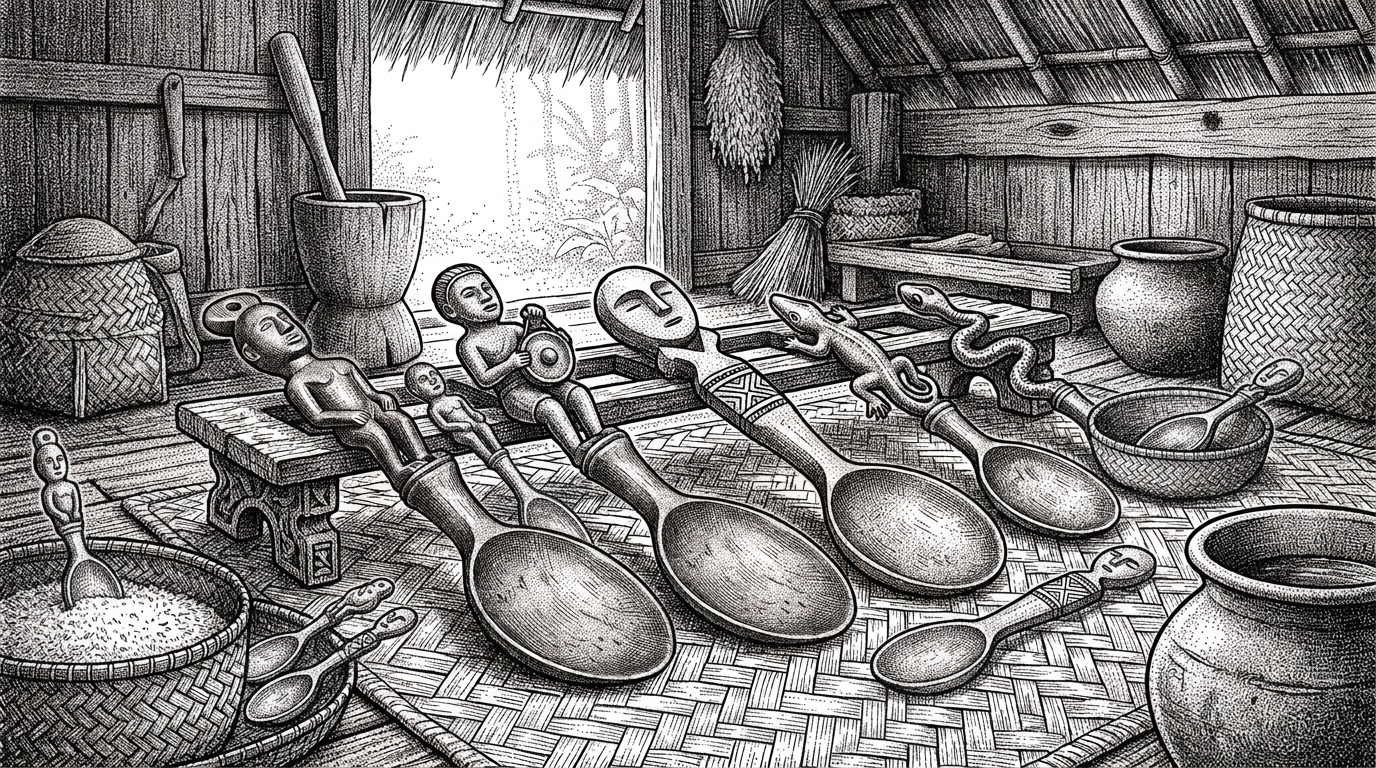
When the editor A.V.H. Hartendorp visited ninety years ago, he found that spoon-making was a dedicated craft. An artisan carved the handles to resemble local gods or family life: a mother holding her baby, a father carrying a child upon his back. No two spoons were quite the same.
In an ordinary household, every person had a personal spoon, hung from a wall peg after supper. Men took theirs along when they left the house, tucked into a woven hip bag.
A pakko was an heirloom, passed from grandfather to son. To sit at an Ifugao table and receive an ancestral spoon was a quiet privilege. Etiquette demanded that every piece be scrubbed clean before and after eating. To offer a guest a dirty spoon was plain bad manners.
At mealtime, the family gathered around a central wooden bowl, dipping their spoons into the shared rice. Strict rules governed how one ate, though these were set aside when a visitor arrived.
Hartendorp noted that these carved handle-figures belonged strictly to the Ifugao, unseen anywhere else in the region. Today, many have traveled far from Luzon. They sit under display lights in museum cases, or show up on auction sites for two hundred dollars apiece. But stripped of their price tags, they remain what they always were: useful things, made with care, meant to feed a family and keep old names alive.