
My younger self, newly arrived in the contiguous United States, was blessed with a chronic case of itchy feet. I simply could not sit still. Though I had stepped away from the daily frenzy of the newsroom, my typewriter was rarely idle as I sent stories out into the world and hoped for the best. I was also attempting to launch a small business—a noble enterprise that was swiftly nipped in the bud for reasons we shall politely leave unsaid.
Through that unsettled stretch, however, I always had Mayport to look forward to.
On the surface, my excuses were delightfully simple: a plate of something fresh and delicious at Safe Harbor, a front-row seat to watch pelicans act like pelicans, and a harmless curiosity about a house everyone swore was haunted. But underneath it all, the place worked a charming spell on me. This breezy little fishing village at the edge of Jacksonville felt remarkably like home. Travel, I’ve learned, has a funny way of holding up a mirror—showing us how our daily whims are often steered by old memories, as if a nostalgic old soul inside us is perpetually pining for an earlier era.
That restless curiosity is what drew me to Mayport a few years back. Wandering the neighborhood, a storied old house caught my eye, tickled my imagination, and sent me down a rabbit hole of local lore.
It turns out Mayport has been keeping time for a very long while. Long before French Huguenots arrived in 1562—only to be promptly shooed away by the Spanish—the Timucuan people had called these shores home for thousands of years. Archaeologists have uncovered evidence of human life stretching back across ten millennia and nine distinct cultural epochs.
The Timucua surely would have put up a stronger defense against the newcomers had they possessed immunity to the ship-borne diseases brought by their visitors. Instead, invisible epidemics nearly wiped them out. The story struck an immediate, painful chord with me, recalling the Pacific Islanders of Guam, the Mariana Islands, and Kosrae, who suffered that exact same fate. Foreigners hardly needed their muskets or swords; their virulent stowaways did the deadly work for them without swinging a blade, slipping ashore unseen to claim the vulnerable one by one.
Yet, over dinner at Safe Harbor, surrounded by the kind of savory pescatarian feast that makes you forget your troubles, my mind took a gentler turn. I pictured those early days, imagining the defeated French sailors packing up their gear and heading back across the Atlantic while Spanish flags went up over the dunes.
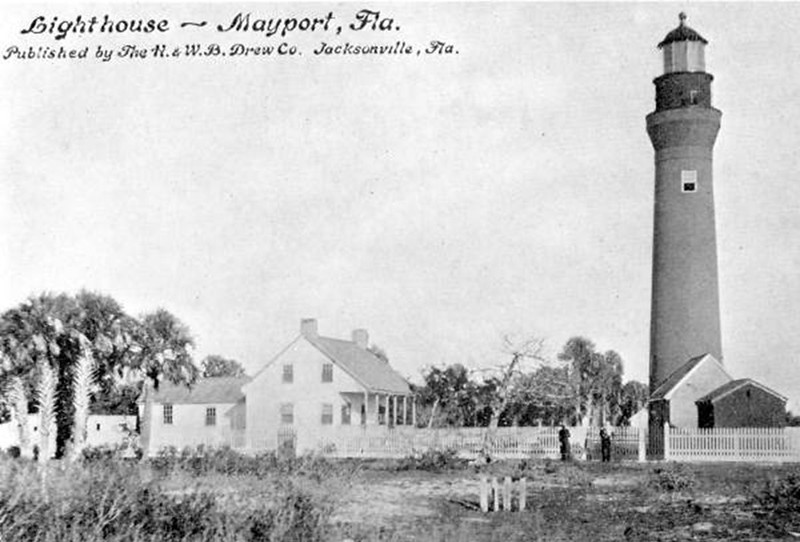
Mayport doesn’t brag with huge, towering monuments, but it holds on to a few sweet relics from the late nineteenth century. There is the lighthouse, and there is the Presbyterian Church, standing peacefully on its corner since 1892. Local tradition—thanks to notes left by Helen Cooper Floyd—tells us it was first christened the Addie Fatio Community Chapel in honor of a local parishioner.
Then, of course, there is the William Joseph King House, which happily supplies a playful goosebump or two. Even Mr. King himself left behind lively accounts of uncanny run-ins with spirits who seemed in no particular rush to leave.
If the ghost stories threaten to get too spooky, the pelicans offer an instant cure. They gather in great, cheerful numbers near the Safe Harbor parking lot, where birdwatchers like myself can spend an easy afternoon taking snapshots as they glide in for landings or preen unbothered just a few feet away.
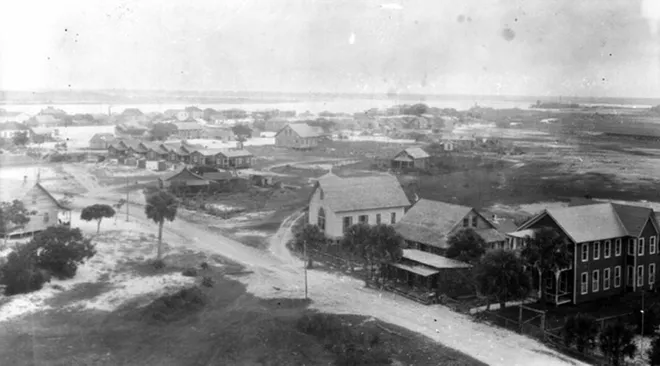
Mayport sits comfortably between what was and what is. It hangs onto its old-world charm without putting up a fight against the present day—a modest little outpost on the water, welcoming the new while holding fast to what it remembers.