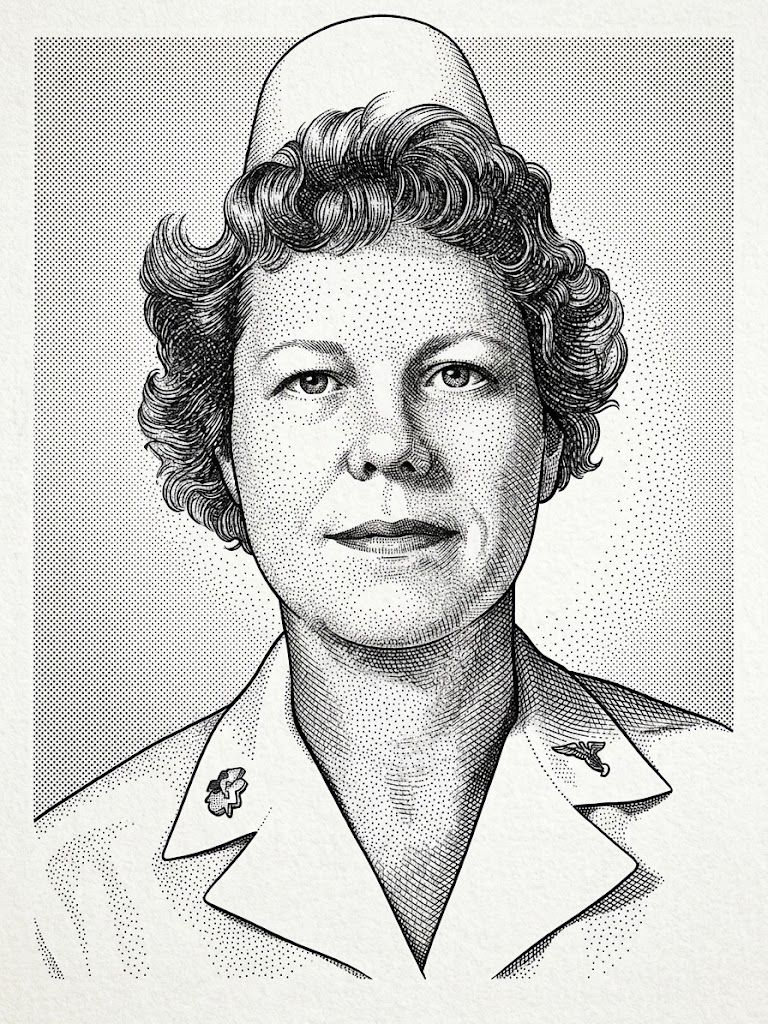

“Women were not supposed to be on the front lines,” Lieutenant Colonel Madeline “Madge” Ullom used to say, “but on the front lines we were.”
In 1938, getting into the U.S. Army Nurse Corps took patience. The entire corps numbered just 625 women, and opening a spot usually required someone to die or retire. When Ullom, a young nurse from Nebraska, finally secured her commission, she won what was widely considered the gem of overseas duty: the Philippines. For three years, life in Manila was a easy routine of tropical heat and quiet garrison shifts.
Then came December 1941, and the world blew apart.
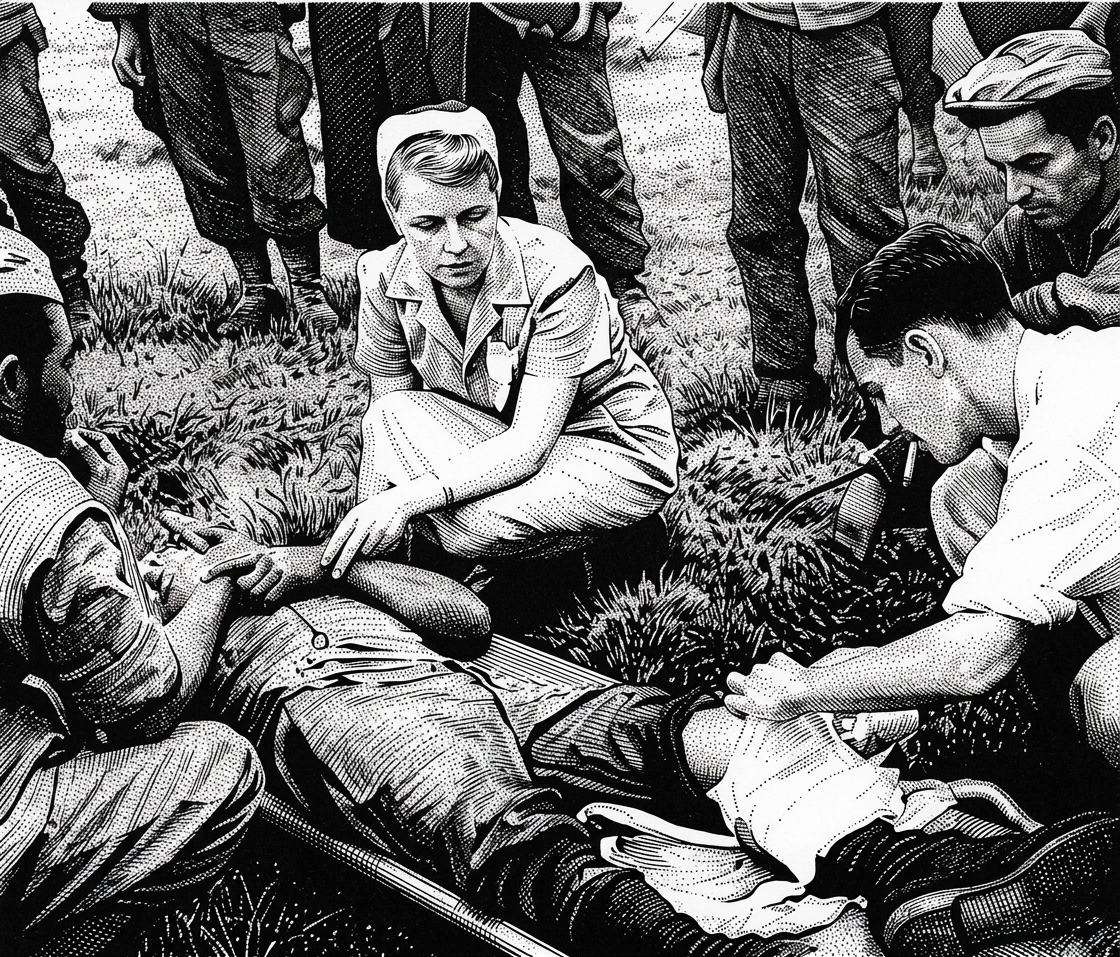
As Japanese forces swept across Luzon, Ullom and her fellow nurses evacuated Sternberg General Hospital, retreating first into the jungle wards of Bataan and eventually into the damp, echoing gloom of Corregidor’s Malinta Tunnel. Underground, beneath a constant thrum of artillery fire, they worked through endless streams of casualties. When the island fortress surrendered, the nurses stood by as the Stars and Stripes came down.
“We women wept,” Ullom recalled. “The men, many of them wounded and all of them exhausted, did not give way. They stood straight and firm, but the whole story was written in their faces.”
Surrender meant internment. Sixty-four Army nurses were marched behind the high concrete walls of Manila’s University of Santo Tomas, beginning a thirty-seven-month trial of survival.
Privation became the daily rhythm. Each prisoner was allotted a patch of floor space measuring three feet by six. To conserve precious soap, clothes were soaked overnight in fire buckets. Daily rations gradually dwindled to two meager scoops of watery rice soup. Camp authorities assigned every adult to manual labor, and Ullom spent hours picking bugs out of raw grain and hauling heavy trash until malaria and starvation took their toll.
Even as their bodies gave out, the nurses kept an improvised camp hospital running. They managed sickness, petty indignities, and strict camp rules—including a mandate to stop six paces short of any Japanese guard and execute a deep bow. “What really got us,” Ullom remarked later, “was the philosophy behind it.”
Liberation arrived on the night of February 3, 1945, when American armor smashed through the campus gates. Freedom brought scenes both triumphant and jarring. As captured guards were rounded up, camp children—who had spent their entire early lives learning deference—shouted at the tank crews, “Make ’em bow! Make ’em bow!”
Moments later, a soldier tried to soothe a crying boy by handing him an ice cream cone. The child, who had known only internment, looked at it without recognition.
“I don’t know what ice cream is,” he told the GI, “but I’ll take a sweet potato.”
Ullom survived the internment, received the Bronze Star, and stayed in uniform until 1964. Before her death in 2001 at ninety, she returned to the Philippines four times—drawn back to the quiet grounds where sixty-four women had held line and life together.
Ullom survived the internment, received the Bronze Star, and stayed in uniform until 1964. Before her death in 2001 at ninety, she returned to the Philippines four times—drawn back to the grounds where sixty-four women had held line and life together. As the last surviving Army nurse from the defense of Bataan, she remained the final living bridge to the storied cohort forever remembered as the Angels of Bataan.