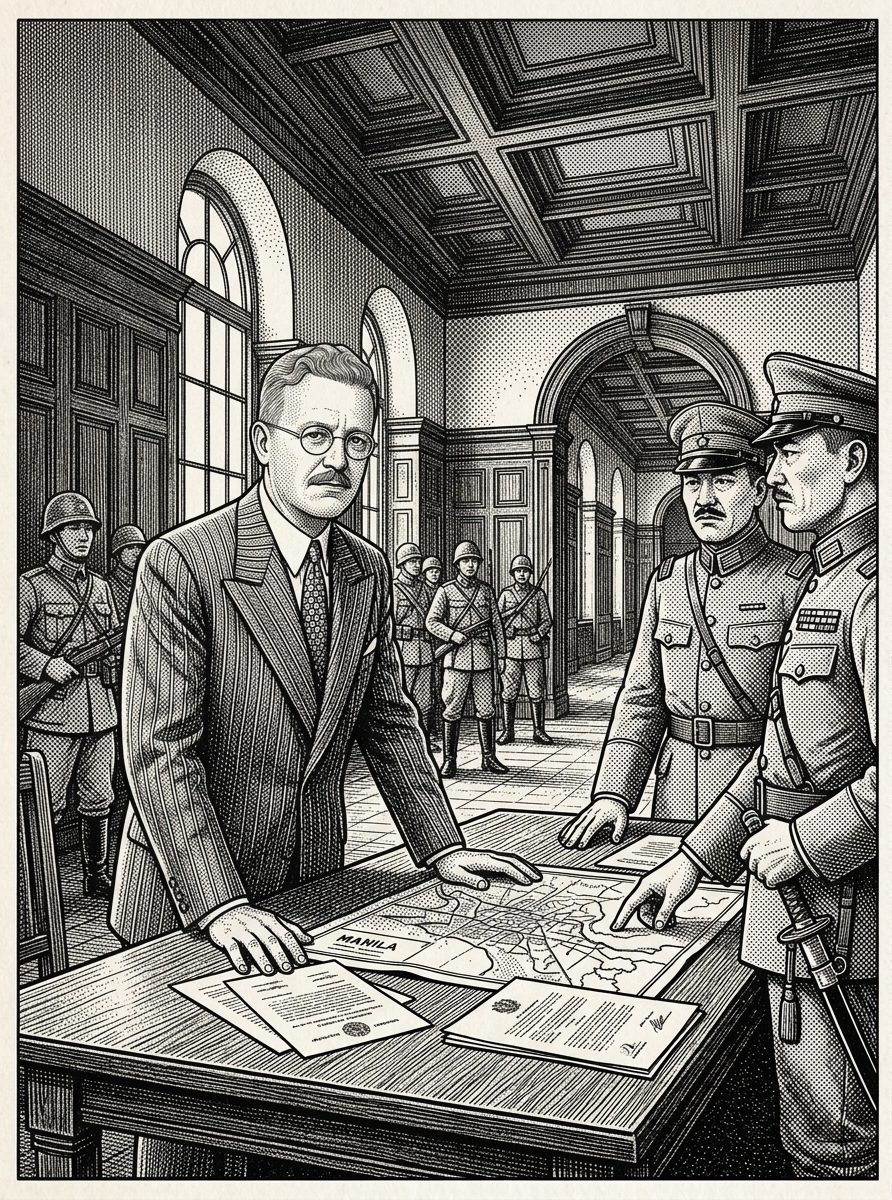

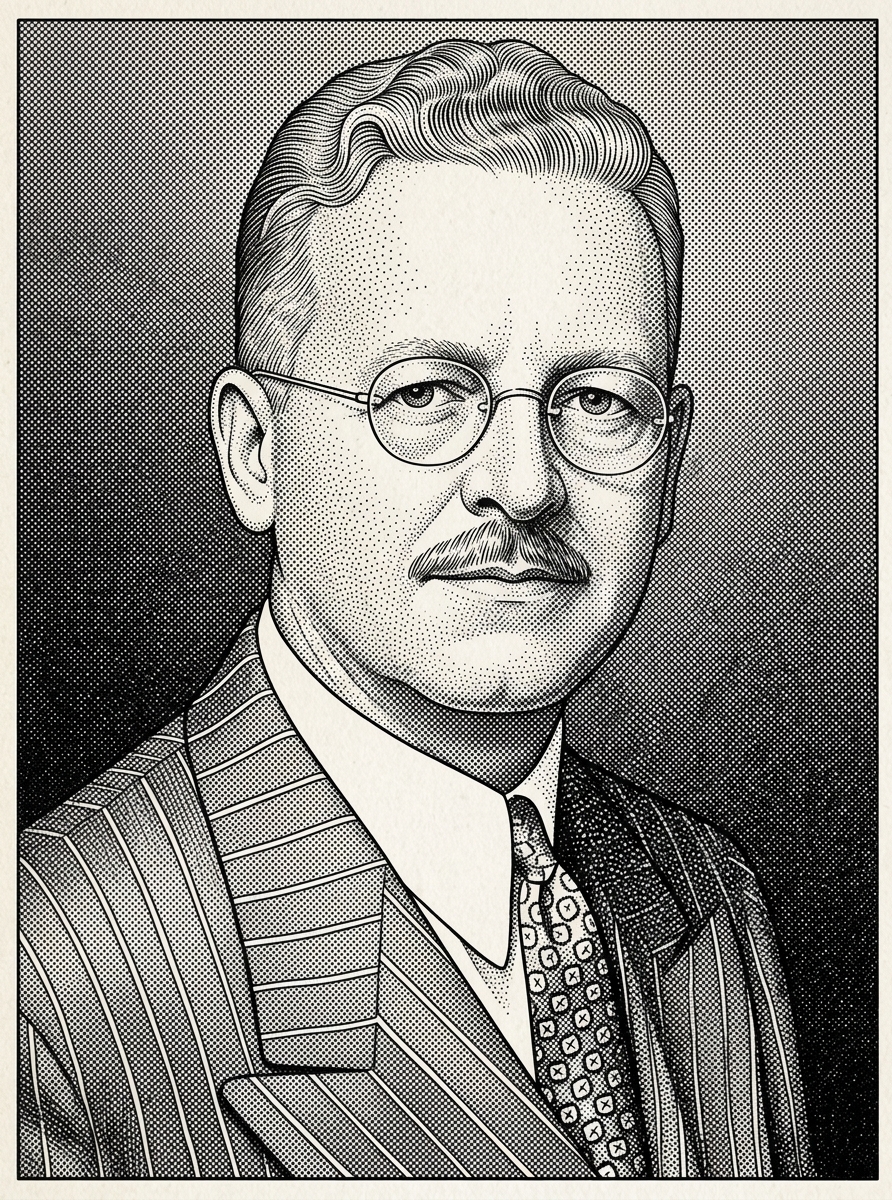
Before everything fell apart, Grinnell ran Far East operations for General Electric. That life ended when the Japanese military took over the twenty-hectare campus of Santo Tomas University, turning its lawns and lecture halls into a prison. The four thousand captives needed someone to deal with the guards, so they elected Grinnell to lead their committee. Overnight, an executive found himself standing between thousands of hungry prisoners and men with bayonets.
For three years, he played a dangerous double game. He had to look compliant to the camp commanders while secretly breaking their rules to keep people alive. When rations ran dry, Grinnell went down to the gates and talked local merchants into handing over rice and vegetables for hand-signed IOUs. He promised General Electric would honor his signature when the war ended—which the company eventually did. For prisoners who had nothing left, he quietly wrote personal loans out of hidden corporate funds, keeping families going two hundred dollars at a time.
By the winter of 1944, the arrangement collapsed. Two days before Christmas, fifteen Kempeitai military police marched in and arrested Grinnell along with three other committee members—Alfred Duggleby, Clifford Larsen, and Ernest Johnson. No charges were filed, but everyone knew the police had likely caught on to the smuggled food, cash, and news notes slipping past the wire.
The police took all four men away in the dark, and they were never seen in camp again.
American troops liberated Santo Tomas on February 3, 1945—just a day before a planned execution of the remaining prisoners. But Grinnell wasn't among them.
Weeks later, a search team followed local rumors to a muddy field at Harrison Park. There they uncovered a shallow grave holding fourteen men bound together with wire. A friend named Charles Schelke identified Grinnell by the initials CCGstitched inside his collar, his old tan windbreaker, and his hair. Doctors estimated the men were killed around mid-January, roughly three weeks before the tanks rolled through the gates.
They buried him on February 22 on the university grounds he had tried so hard to protect. He had taken on a heavy, miserable job, relied on plain decency to outsmart cruelty, and ultimately bought his neighbors time with his life.