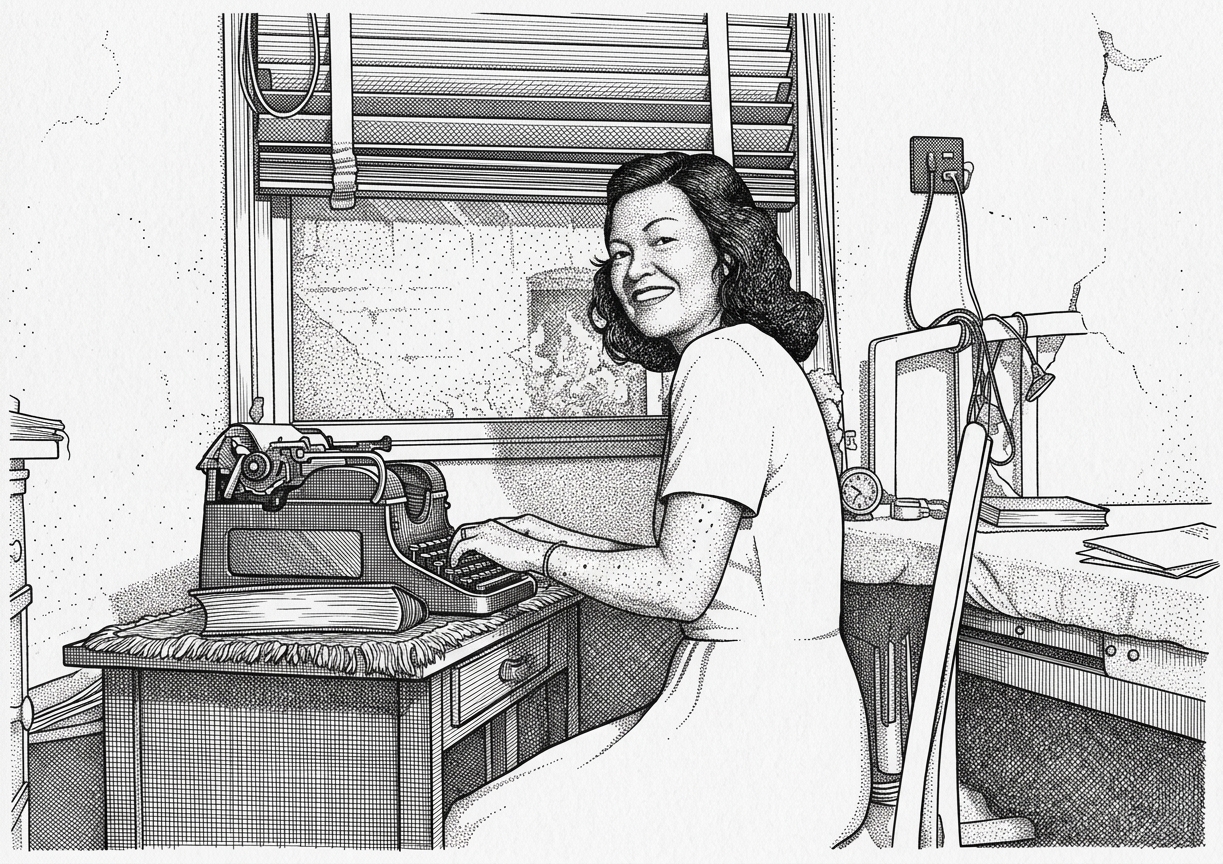
Believing her life would be short, "Joey" offered her services to the Philippine underground. Japanese guards were terrified of catching the disease. Where other couriers faced thorough searches at checkpoints, guards waved Joey through with a shiver of disgust. She turned that fear to her advantage. She carried hidden messages, mapped enemy gun sites, and smuggled medicine through the lines.
Her hardest mission came in late January 1945. American troops were pushing toward Manila to free thousands of prisoners at Santo Tomas. But the 37th Infantry Division was heading straight into a trap: the Japanese had heavily mined the roads around Calumpit.
Joey taped a map of the minefields between her shoulder blades and set out on foot. Struggling against fever, headaches, and exhaustion, she walked past enemy outposts and coastal patrols for miles. When she reached Malolos and found the advance unit had already moved, she kept going until she found the officers and handed over the map.
Guided by her sketch, the Americans bypassed the landmines, breached the city defenses, and liberated Santo Tomas on February 3.
After the war, Joey received the U.S. Medal of Freedom. In 1948, she traveled to Louisiana for treatment at the national leprosarium in Carville, where doctors halted the disease.
She rebuilt her life step by step. She married, earned college degrees, joined the Peace Corps, and settled in Washington, D.C. Yet the old stigma cast a long shadow. Desiring a quiet life, she took a new name—Joey Leaumax—and buried her past so completely that even close colleagues never knew what she had done.
Only years after her death did the truth come out. She was the woman who turned total exile into salvation for thousands, carrying the safety of an army taped to her back.