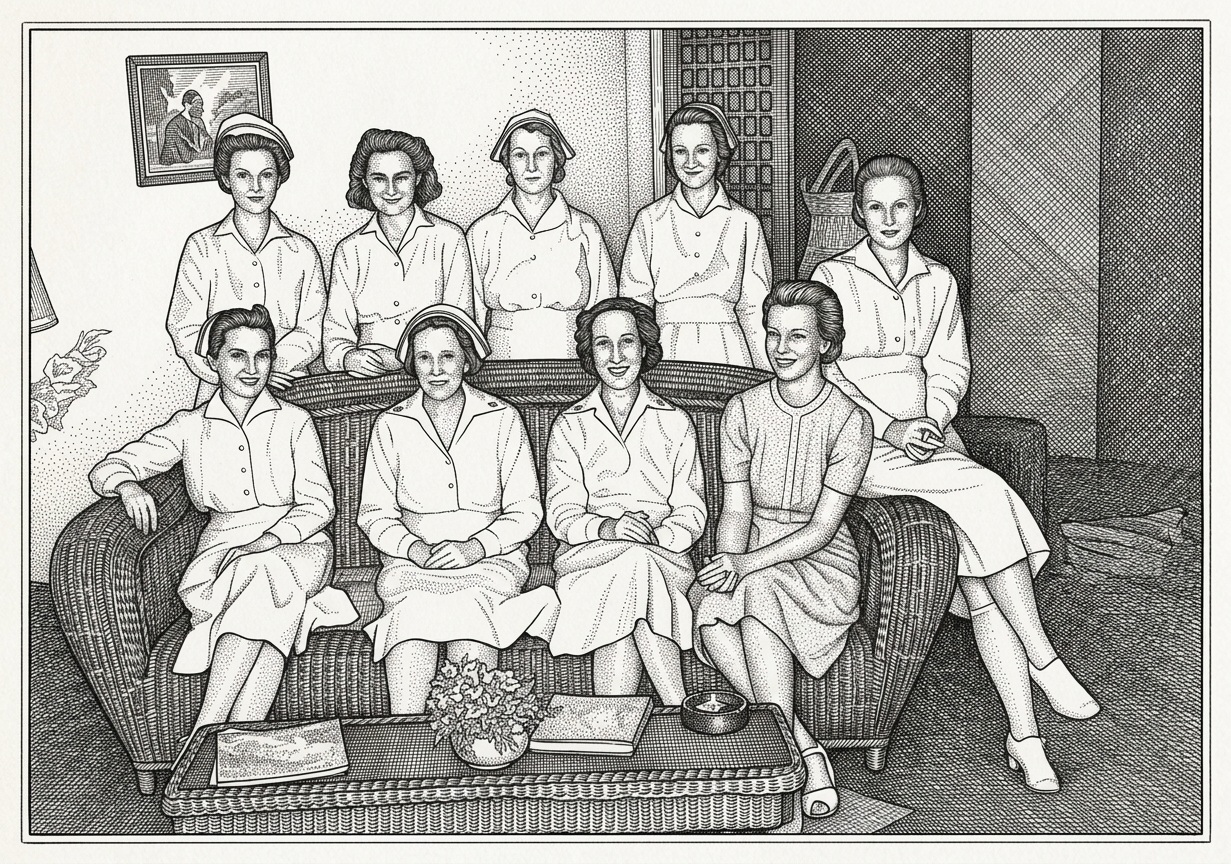

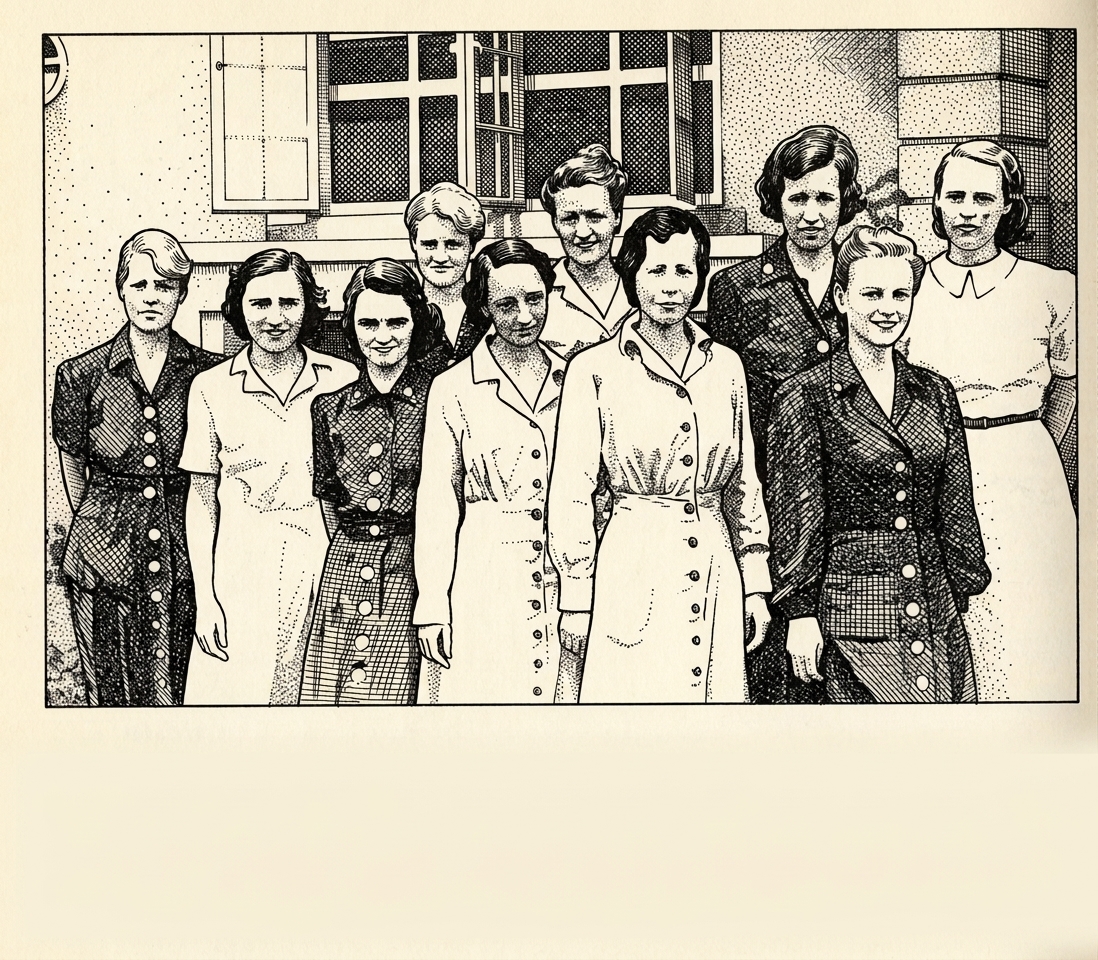
When Japanese forces swept across the Philippines in December 1941, eighty-seven Army nurses retreated toward Bataan and Corregidor. Through administrative oversight, eleven Navy nurses were left behind in Manila. Their commander was Lieutenant Commander Laura Cobb, a hazel-eyed Kansan with two decades in uniform and a quiet, steady resolve.
Without orders, Cobb moved her unit into St. Scholastica’s School, turning the convent into a hospital for the wounded streaming in from the front. Her instructions to her nurses were simple: maintain order and military discipline.
In March 1942, the Japanese interned Cobb and her unit at the University of Santo Tomas. Working with Dr. Charles Leach of the Rockefeller Foundation, they established the internment camp’s first proper clinic, caring for thousands of civilians. When sixty-six captured Army nurses later joined the camp, Cobb quietly smoothed over friction between the services, keeping everyone focused on the immediate work of survival.
Her devotion was tested again in May 1943, when the Japanese ordered 800 men, including Dr. Leach, transferred to a new camp at Los Baños. Knowing the site had no medical staff, Cobb and her ten nurses volunteered to go along. At the agricultural campus, they built a 25-bed infirmary out of almost nothing, tending to the sick as rations shrank to starvation levels.
For nearly three years, Cobb kept her unit intact, disciplined, and alive. On February 23, 1945, American paratroopers and Filipino guerrillas raided Los Baños and freed the camp. Every nurse under Cobb’s command survived.
Awarded the Bronze Star, Cobb retired from the Navy Nurse Corps in 1947, her health permanently weakened by captivity. She returned home to Wichita, where she lived quietly until her death in 1982 at eighty-six—a commander whose firm, unpretentious leadership saw eleven women safely through the war.